
Bed-Wetting Alarms for Elderly Adults: A UK Carer's Buying Guide
At ten past two in the morning, you are on your knees changing a bed for the second time this week. Neither of you says a word. Your mother was a ward sister for thirty years. She handled worse on other people. The silence around it finishes you.
Nobody plans for this.
When an adult you love starts wetting the bed—after a stroke, an operation, or as dementia advances—the first instinct is to mumsy it in private, one sheet at a time. You don't have to.
A quiet industry of moisture-sensor alarms exists for this exact job. UK specialist shops sell them to care homes and family carers alike. The trouble is finding them among years of children's products, and knowing which design suits the adult in your care.
What the alarm is actually for
The concept is simple and undignified-free. A thin fabric sensor goes under the bed sheet. The moment moisture lands, a small transmitter radios an alert to a pager in your pocket, kitchen, or the carer's bedroom. Health and Care, a UK stockist, puts it plainly: a quick response means an elderly person isn't left lying in discomfort through the night.
The sensor stays under the sheet. The person in the bed never wears anything. Nothing needs charging on the patient. That matters more than it sounds. Most adults tolerate a mat they never see long before they tolerate a device on their body.
Two designs handle the alerting. A loud local alarm wakes whoever sleeps nearest. A pager kit buzzes silently. On better models, it displays a text message naming the bed that alerted. This is useful when a house holds more than one person in care.
Skip the children's market
Search for "bed-wetting alarm" and almost everything returned is aimed at childhood. The Dri Sleeper Eclipse kit, £135.99 at healthandcare.co.uk, is explicitly "designed for children ages four to fourteen." Those alarms condition a child to wake up dry over weeks of consistent use.
You cannot condition a post-stroke adult the same way. The goal flips: alert the carer, not wake the patient. Look for adult enuresis sensor systems built to sit in beds and radio the news outward. Most people never finish that search.
Two systems carers can buy today
Both systems below are EnuSens lines—a cotton sensor mat wired to a transmitter, sold by UK care-equipment shops. We checked prices and specs on their shop pages today.
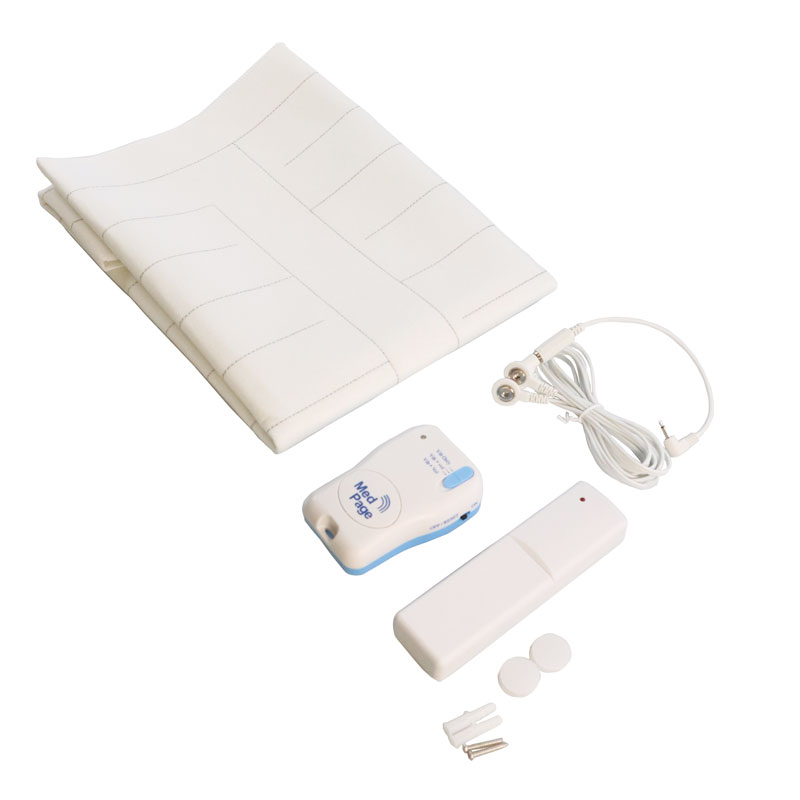
Medpage EnuSens MPPL with Wireless Pager — £123.30
This is the sensible starting point for one adult at home. The kit comes out of the box with a fabric sensor, transmitter, pager, and batteries. Nothing to pair. Nothing to charge nightly. The pager holds up to nine transmitters, so a carer watching several rooms carries one device. It buzzes silently and beeps, with adjustable volume. Signal range runs 250 to 400 metres depending on walls.
The drawback is by design. It uses a latching alarm that only you can reset. A patient cannot dismiss their own alert. This is thoughtful. It also means you drag yourself upstairs every time. The mat is machine-washable, rated at about 200 wash cycles.
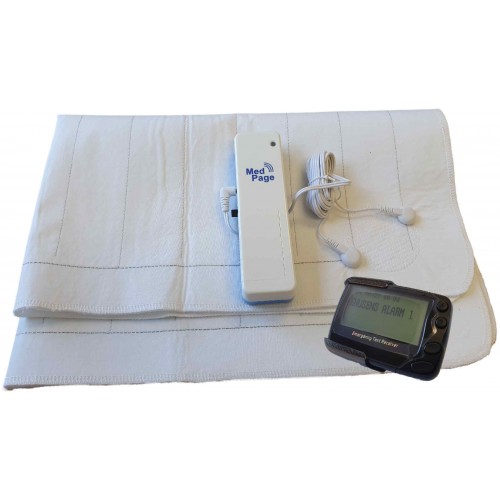
EnuSens with POCSAG Transmitter and Text Pager — £299.99
Step up to this when the sleeper and carer are far apart: an annex, a farm, or a care home wing. The transmitter drives a proper POCSAG text pager with a range up to 400 metres. The message names which bed wetted. With several people in care, that alone justifies the price for many households. The pager has a backlit four-line display and silent vibration.
Honest admission: £299.99 is a lot of money for a beep at night. The shop warns the 400-metre range assumes few obstructions. In a thick-walled house, test before you commit the kitchen dresser to the charity shop. Buy it for a real second bedroom or multiple-resident need, not for a terrace.
The £37.50 habit worth getting into
Whatever system you choose, buy a spare EnuSens sensor mat. It costs £37.50 at healthandcare.co.uk, is machine-washable, tumble-dry safe, and sized for beds, chairs, and wheelchairs. Rotation is the trick. While one mat is in the wash, the other is in the bed. The alarm is never off-duty. Each mat's wash cycles are halved. Carers who do this never ring the shop at eleven at night.
Two more uses are worth knowing. Both systems alert on any moisture, so the mat can go inside a pillowcase to catch vomiting. Health and Care markets it for seizures that bring on vomiting or incontinence. The same mats also flag a wheelchair user who has wet themselves before skin breaks down.
Ask the GP before the checkout
One word on causes. This is health information, not a diagnosis. Bed-wetting that is new or clearly worsening in an adult deserves a proper look. Urinary infection, medication, diabetes, and prostate problems can all sit behind it. NHS adult continence services treat nocturnal enuresis in grown-ups routinely. The West London NHS Trust lists it plain among the conditions its continence team manages. A GP referral opens that door. It costs nothing. An alarm manages the night; the GP checks the why.
A UK money note: the shop prices above include 20% VAT. However, healthandcare.co.uk flags VAT relief on its alarms range. Under the HMRC scheme, goods bought for a disabled or chronically sick person can be sold VAT-free on a simple declaration. If your parent has a diagnosed long-term condition, ask the shop for the form before you order. That is £20-plus back on the £123.30 system.
If a chair alarm sounds more relevant—a parent who is unsteady getting up at night—the Alert-iT Sense-iT chair pad, from £89.99 on the same site, alerts when someone leaves their chair rather than when moisture appears. Different job, same pocket pager idea.
If you only remember one thing
Start with the £123.30 EnuSens MPPL kit and a £37.50 spare mat. Book the GP appointment in the same week. That combination answers the 2am problem tonight and checks its cause next Tuesday. It costs less than most people spend on a garden furniture set. The £299.99 text-pager system earns its keep only when distance or several patients demand it. Dignity is not sleeping in a wet sheet until morning. Nobody in the household should have to.
Last updated: 2026-09-30